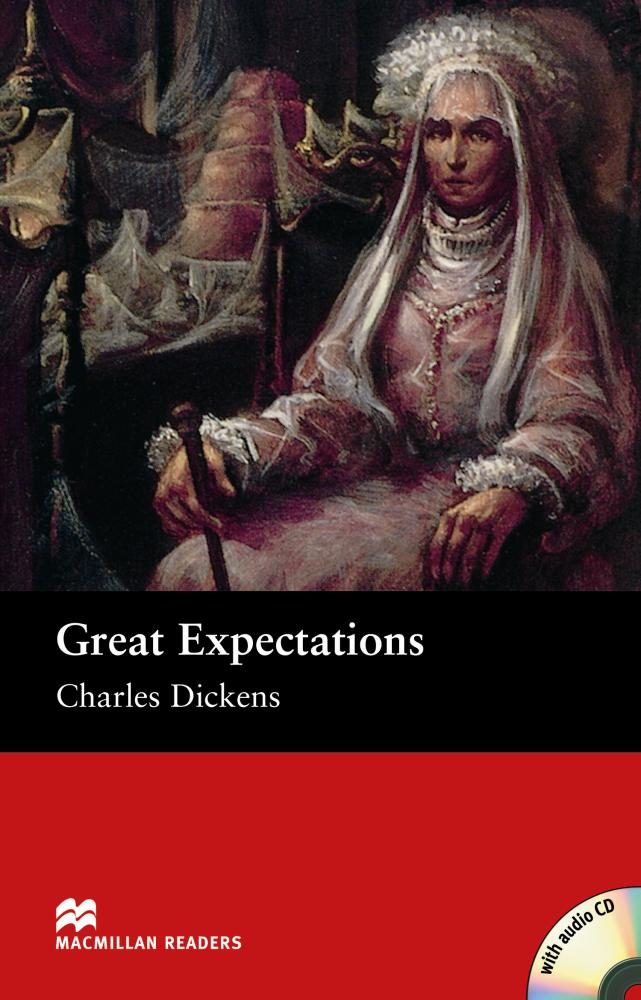
 GREAT EXPECTATIONS
Before
reading
I.-
Who is the writer of this novel? Find out at least five important things about
his life and write them down.
Charles Dickens. British novelist
Charles Dickens was born on February 7, 1812, in Portsmouth, England. Over the
course of his writing career, he wrote the beloved classic novels Oliver Twist,
A Christmas Carol, Nicholas Nickleby, David Copperfield, A Tale of Two Cities
and Great Expectations. On June 9, 1870, Dickens died of a stroke in Kent,
England, leaving his final novel, The Mystery of Edwin Drood, unfinished.

II.-
When did he write Great Expectations? Find out at least five important things
about his time and write them down.
Charles’ Dickens Great Expectations is
almost like an autobiography of his own life. Dickens uses his own life stories
and experiences to implement into the life of his protagonist Pip as any good
author does. As we will explore, there are many similarities between the life
of Pip in Great Expectations and Charles Dickens’ own life.
III.-
What is the meaning of the title?
Is the meaning of the title: Grans
expectatives.
IV.-
This is one of the most important fragments in the novel. Read it slowly and
think about how the story may continue. What will happen next? Write down at
least two possibilities.
|
The marshes beyond the
churchyard were grey. The river beyond the marshes was a darker line of
grey. A bitter wind was blowing across the marshes from the sea. The
graveyard was a dark and frightening place. I shivered. Cold and afraid, I
began to cry. ‘Quiet, you little
devil!’ cried a terrible voice. ‘Keep still – or I’ll cut your throat!’ A
rough-looking man had taken hold of me. He held me tightly by the
neck. ‘Oh, don’t cut my throat, sir!’
I cried. ‘Please, don’t!’ The man’s
rough grey clothes were torn and muddy. Like me, he was shivering with
cold. His shoes were old and broken. He had a torn piece of cloth tied
round his head. And his eyes were
wild and terrible. ‘Tell me your
name,’ the man growled. ‘Tell me. Quick!’
‘Pip, sir. Pip,’ I answered.
|
I think that can happen is that this
man ends up dead.
While
reading
I.-
Answer these questions while you are reading:
1. Where did Pip get his name?
It was the county where he was
from.
From Joe Gargery.
From his sister and caregiver Mrs. Joe
Gargery who thought he was an irritating
pip-squeak.
It
was how he pronounced his last name when he was a child.
2.
Who is the narrator of Great Expectations?
Joe Gargery.
An old sailor who heard the
story.
An unknown omnipotent narrator who
uses the third person.
Pip.
3.
Mrs. Joe can best be described as:
Strange but a hard worker.
Kind and generous.
Quiet and shy.
Nagging
and temperamental.
4.
Pip's relationship with Joe for much of the book can best described as:
An
friendship, but some of the time unequal as Pip feels embarrassed by Joe.
A father/son relationship.
A friendship, but much of the time
unequal as Pip thinks he is superior.
A friendly acquaintance.
5.
The convict who Pip feeds at the beginning of the novel reappears later with a
name.
That name is:
Jaggers
Mr. Wopsle
Magwitch
Wemmick
6.
For Pip, dinner with Mrs. Joe was always:
Agonizing
Friendly
Delightful.
Yummy
7.
Pip is helped with his education at a young age by:
Pumblechook
Biddy
Joe
Mrs. Joe
8.
Pip is first blessed with great expectations when:
He receives notification from Mr.
Jaggers that he is to go to London.
Miss Havisham gives Pip her
inheritance.
Miss
Havisham requests that he comes and plays at her mansion.
Joe gives him a job in the forge.
9.
Throughout the novel, the marshes, for Pip, have represented his:
Great expectations.
Love
for Estella.
Lowly background.
Love for Biddy.
10.
Pip becomes roommates with Herbert in London. Pip had met Herbert once
before,
in:
The marshes with the convicts.
Miss
Havisham's garden, where they fought.
The town pub.
A coach on the way to London.
11. Wemmick would probably agree most with this
cliché'.
It's better to burn out then to fade
away.
A man's home is his castle.
There's no time like the present.
Do
unto others as you would have them do to you.
12.
When Joe visits Pip in London, the meal they had together can best be described as:
Jolly and joyful.
Just
like old times.
Grandiose, yet delicious.
Stilted and uncomfortable.
13.
It is apparent by midway through the book that Miss Havisham raised Estella
to:
Clean the house.
Be with Pip.
Become a housewife and mother.
Have
no heart and break the hearts of men.
14.
While living in London, Pip believes that he belongs with Estella and that they
would
be blissfully happy if they married. At the same time, however, Pip
admits
to himself:
She's too career oriented.
That she was too pretty to ever be
happy with him.
She's much too short.
That
any time he spends with her he himself is constantly miserable.
15.
The final words of Miss. Joe Gargery apparently indicated that:
That she was Pip's real mother.
That Orlick had crippled her.
She was apologizing for her behavior
toward Pip and Joe.
She
had a large inheritance herself.
16. The 'great expectation' that Pip expected for
his 21st birthday was:
His benefactor would make her/himself
known to Pip.
He would finally get a job.
Miss
Havisham would give him more money.
Estella would agree to marry him.
17.
How does Pip help Herbert?
He
gives Herbert some cash.
He secretly sets up a job for him.
He leaves Herbert his
inheritance.
He gets Herbert out of jail.
18.
At one point, Estella is being courted by Drummle, who:
Pip wrestled once in the Miss
Havisham's garden.
Pip looks up to and admires.
Was
Pip's best friend in the Finches of the Grove.
Pip despised even before he started
seeing Estella.
19.
Why did Magwitch work all those years only to send the money to Pip?
Because Magwitch loved Miss
Havisham.
Because
Pip fed him wittles many years before when he was an escaped convict.
Because Pip was his sister's son.
Because Pip was his son.
20.
Pip's reaction to Magwitch when the convict presents himself as Pip's benefactor is:
Cold
and disgusted.
Worried and stressed.
Pip already knew.
Warm and loving.
21.
Magwitch needs to hide while in London because:
Miss Havisham will have him hung.
Jaggers wants to kill him.
Pip doesn't want people to see
him.
He
would be arrested immediately in the police found him.
22.
The half crazed man named Arthur who worked with Compeyson before Magwitch was actually:
Pip's father.
Miss
Havisham's brother.
Estella's father.
Miss Havisham's lover.
23.
According to Magwitch, why did Compeyson get a lesser sentence than Magwitch
when they both got into trouble?
Only because Compeyson was a
gentleman.
Because Compeyson did not actually do
the crime.
Because
Compeyson was related to Miss Havisham.
Because Jaggers was Compeyson's
lawyer.
24.
Wemmick finds out that Pip is being watched by:
Jaggers.
The prisoners he befriends at
Newgate.
Magwitch.
Compeyson.
25.
Ironically, after Miss Havisham catches on fire, the doctors lay her:
On her table where the wedding cake
is.
In her bed that she has never slept
in.
On
a gurney kept close for just such an occasion.
In her garden where she had not been
for twenty years.
26.
Magwitch is:
Pip's
father.
Herbert's father.
Estella's father.
Miss Havisham's father.

